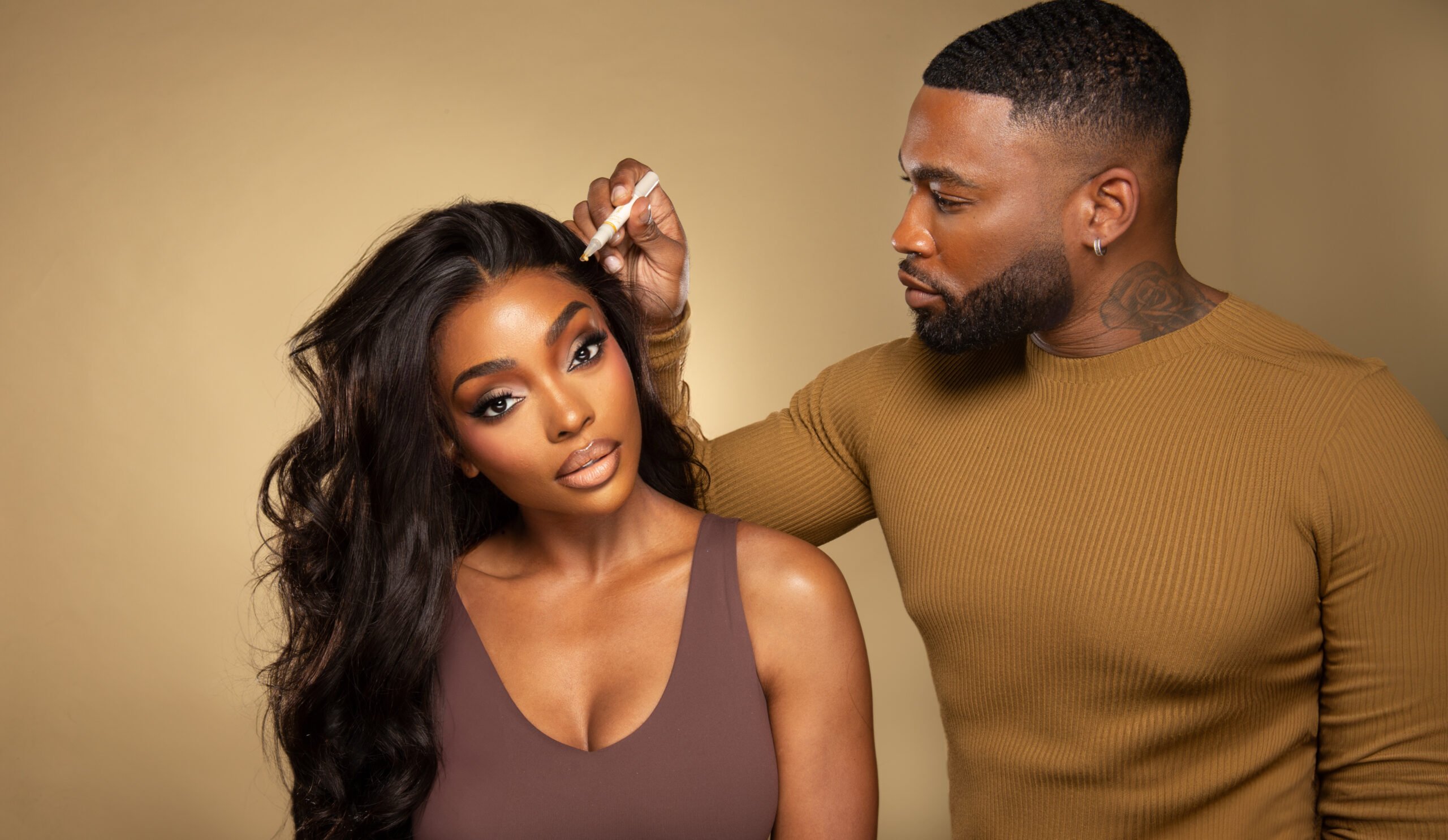
Wigs have long been a staple of Black women’s culture. From Deena telling the Dreamettes to “turn the wigs around,” in Dreamgirls to Sha’Carri Richardson taking off her wig before winning the US National Title, wigs have always been around to tell the Black woman’s story. But even with the evolution of lace fronts and seamless installs, there are so many ways wig care disproportionately affects the outcome of a wig’s final look, including the dreaded white cast that appears when wig glue dries.
Celebrity hairstylist Kellon Deryck has spent nearly two decades in the hair industry, witnessing that issue firsthand. Now, he’s introducing a solution designed specifically with Black women in mind, and he believes it could spark a broader shift in the wig industry.
“I feel like it’s just something that is needed in the industry,” Deryck said to 21Ninety. “A lot of times you’ll see people with pictures and they have a little flashback with a white or gray cast from the lace… I really wanted to create a great lace tint and then the actual glue itself being tinted as well.”
Solving A Problem Black Women Have Been Working Around For Years
Anyone who regularly installs wigs knows all the hacks from mixing foundation with glue to layering lace tint sprays. Those DIY fixes became common because the products available often weren’t designed with deeper skin tones in mind.
Deryck’s latest innovation, a tinted lace adhesive developed with Ghostbond, aims to eliminate that extra work by building pigment directly into the formula.
Instead of one universal “clear” adhesive, the product launches with three shades designed to blend with varying skin tones. According to Deryck, the goal is to simply make wig installs look flawless both in person and on camera.
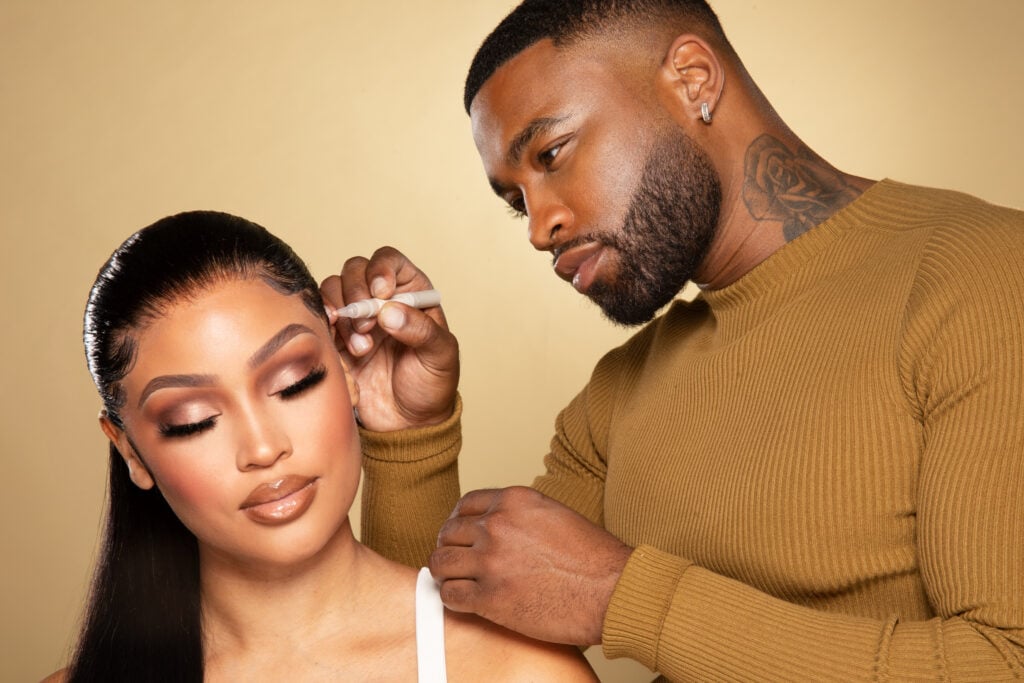
“People don’t even know where to find a good lace tint,” he explained. “So I wanted to create something that alleviates all the problems you might have with installing lace wigs.”
The stylist says the product has been years in the making, with extensive real-world testing before release.
“It’s been three years in the making, but in the last two years I’ve been testing it out with these three colors in particular,” he said. “I do want to do more colors in the future.”
From Salon Floors to Celebrity Hair Architect
Deryck’s insight into wig innovation comes from a career built behind the chair long before celebrity clients and red carpets entered the picture.
“I’ve been in this hair industry for 18+ years,” he said. “The past couple of years has been great, but I feel like I’ve been doing this for so long that I’m just looking for the next best thing.”
His early work included running salons and teaching wig installation techniques around the country. In fact, Deryck says he helped popularize some of the wig methods widely used today.
“I went on tour for three years teaching people flawless illusion installs like how to pluck the hairline and make it look more natural,” he explained. “Some of your favorite celebrity hairstylists have sat in my courses eight or nine years ago.”
The signature “melted” lace look, now a common phrase in beauty spaces, was also born in his salon.
“The whole slogan ‘melt,’ that was something we just made up in my salon playing around,” he said. “Now it’s a household name thing.”
Designing Beauty With Black Women In Mind
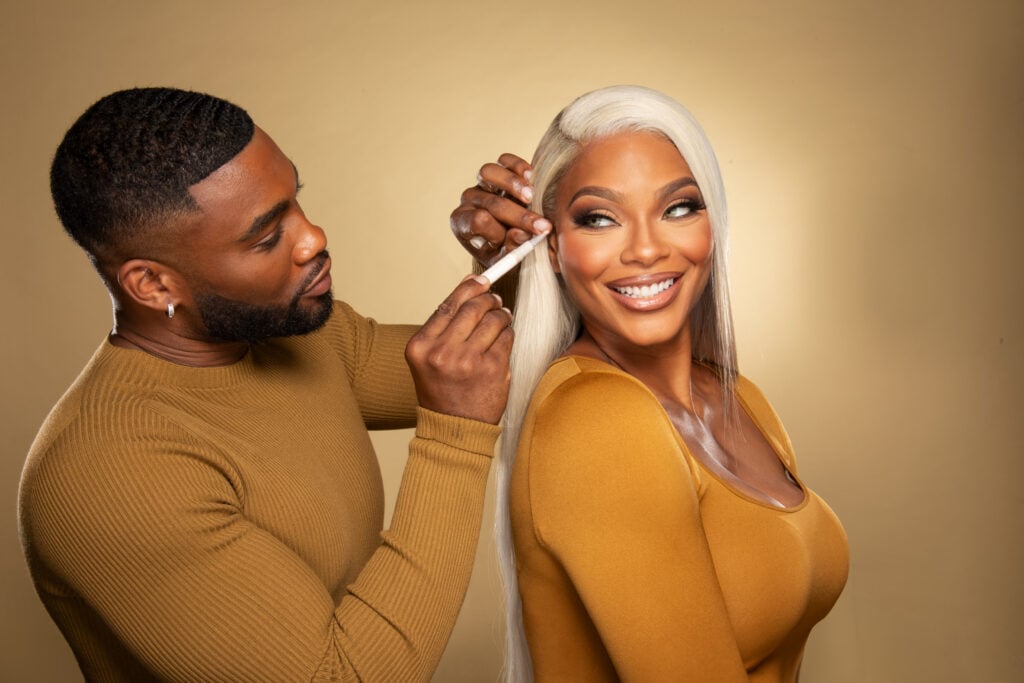
Beyond technical innovation, Deryck says the deeper motivation behind his work has always been representation.
In his experience behind the chair, he often noticed how lighting, photography, and everyday movement could reveal flaws that weren’t obvious in the salon mirror.
“When you feel like something looks great in the chair… everything checks out,” he said. “But then you get behind a camera or look in the rearview mirror and you’re like, ‘Wait a minute, this doesn’t look how it looked in that lighting.’”
Those moments pushed him to rethink what inclusive beauty products should actually look like.
“I just wanted to do something for our people and make sure that they feel comfortable,” he said. “Make it feel pretty, make it feel beautiful, just help them out.”
A Catalyst for the Next Era of Wig Innovation
While tinted wig glue may seem like a simple adjustment, Deryck believes it could open the door for larger changes in how the industry approaches Black consumers.
“This is going to be the start of something revolutionary,” he said. “A lot of these lace wig brands, they’re not catered to us.”
If history is any indicator, he expects the idea to spread quickly.
“I just know for a fact that it’s going to be a lot of copycats,” he said with a laugh. “But it just opens up another avenue of opportunity, an untouched market.”
For Deryck, the adhesive launch is just the beginning of a larger vision. His long-term goal is to create wigs specifically designed with Black women’s needs at the center of the design process.
“Honestly, I really want to come out with a specific line of wigs catering to our people,” he said.
Innovations like these signal something bigger than just better installs. They point toward an industry beginning to recognize the women who helped build it in the first place. With Deryck at the forefront, the future of wig care will finally look like it was designed with them in mind.
